Tuesday, 9 October 2012


BACK TO THE FEN (part two)

by Alex Mitchell


Funny how Dame Nature only seems to get it right about one time out of twenty. Most of us look like an experiment gone wrong. All we lads yearned hopelessly after the lovely Helen Atkins, the only daughter of Big Jack Atkins and way out of our class in looks, brains, social background, the lot; and ignored, at least until the end of the evening, the pairs of other girls dancing disconsolately around their handbags, there for the taking. The lovely Helen, for her part, had eyes only for my best mate, Andy Southwell. It’s strange how all the beautiful, talented people like Helen and Andy pick each other out of the crowd, as if by long distance radar, and how invisible the rest of us, we ordinary mortals, seem to be to them, as if we just didn’t exist. Funny how each up-and-coming generation thinks they’re the first to discover this particular game, that they’ve invented their own set of rules, when the game and the rules have always been much the same.


Andy liked his beer and the snooker table down at the Seven Stars even more than he liked spending time with Helen. For a time, Helen pretended to like the pub too, so that she and Andy could be together more of the time. After a while she got tired of being the only girl there, and would go and sit in the van by herself and wait for Andy to come out to her, which usually took until after closing time.

The Friday night in question, the four of us – Andy, me, Helen and her friend Susan, were at the dance in March. Susan and I had been sort of pushed in each other’s direction by Helen, and were still making up our minds about each other. She was nice enough, I suppose, but she was never going to be “the one”. Looking back, I wonder if I knocked about with Andy mainly so as to be near Helen. I liked neither the darts-and-snooker milieu of the Seven Stars, nor the fizzy keg beer of the period, but I thought it must be me who was out of step. Whatever the case, none of it did me any good at all. It wasn’t until much later that I finally gave up pretending to be one of the good ol’ boys.
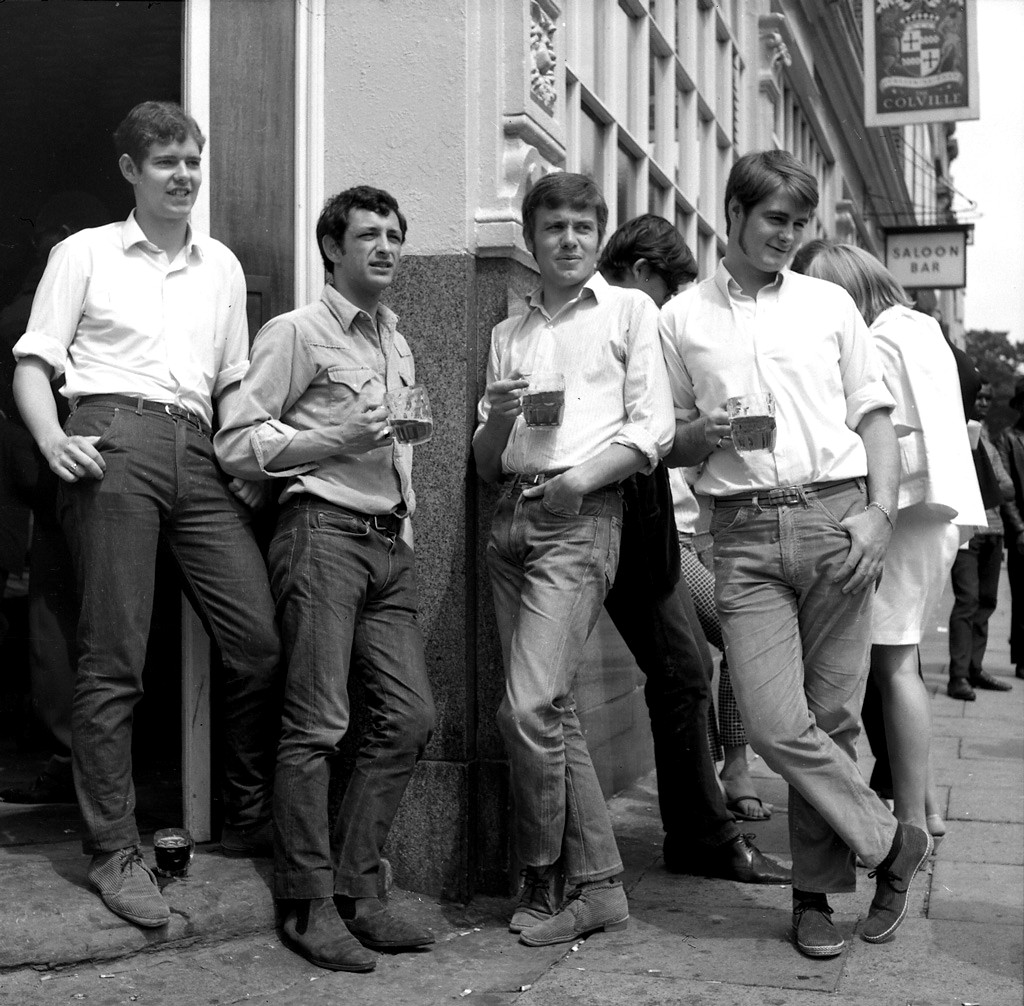

Andy and I were up at the bar as usual, while Helen and Susan were in the dance hall itself. The worst thing about these dances was that, sooner or later, the lads from March would pick a fight with the lads from Guyhirn or wherever, usually on the pretext that somebody had tried it on with their girlfriend or sister or whatever. Lads were always trying to get off with Helen, and would then fall out on Andy or me in a fit of jealous resentment. I noticed two or three groups from previous encounters. The atmosphere was tense, threatening. It was time to exit the premises.

Andy has had a fair bit to drink, but he knows the road across the fen and home to Christchurch like the back of his hand, could do it blindfold. We’re cruising along, no problems, when a white Ford Escort pulls alongside and a lager can smashes against Andy’s side window. The Escort is crammed full of goons from the dance-hall, shouting and screaming foul abuse, mainly directed at Helen. They want us to chase them, want a race. Sober Andy wouldn’t have risen to the challenge, but drunk Andy does.

The back roads across the Fens are dead-straight, but narrow and undulating, being laid down right on top of the river-banks, where the alluvial silt provides a firmer base than would the peat-soil of the adjacent fields, most of which have shrunk and subsided down to a level well below that of the roadway, or even of the rivers themselves. It is easy to go off the road and plunge down into the river on the one side, or into the deep, steep-sided ditches draining the adjacent fields on the other side. Sections of the tarmac have subsided, or are crumbling at the edges, through lack of maintenance. I never understood why they wasted so much time at school warning us about unsafe sex and drugs when far and away the commonest cause of early death amongst our schoolmates was through motor accidents, cars going off the road and ending upside-down in a freezing-cold river or ditch.

As I say, the Fen roads are dead-straight for miles on end, until they take a sudden, often completely unpredictable, right-angled turn around the perimeter of some long-dead person’s land. Flying along at eighty-plus, the Escort in front of us suddenly clamps on the brakes to get around one such bend, losing the back end in the process. Andy doesn’t stand a chance, of course. Our van hits the spinning tail of the Escort and is tipped leftwards over on to its roof, then back on to four wheels again. I hear the girls screaming, as if in the far distance, but I’m unable to scream with them.

It takes me a while to come to, something warm trickling down my face. My right leg is at an unlikely angle and there are white shards of bone sticking out through my trouser-leg, below the knee, although I can’t feel anything yet. Andy is up against the steering-wheel, blood coming out of his mouth. Helen is between us, her head under the dashboard, not moving. Susan is lying on her front out on the bonnet; she must have gone straight through the windscreen, which is completely shattered. I can’t see her face, which is probably just as well.

A police car arrives, followed by an ambulance. I can only hear their voices, can’t see anything now.“Smells like a brewery in here – suppose they’re all pissed as usual. Cover that one’s face, for God’s sake, I can’t look at her like that. It’s worse when it’s a girl.”


TO BE CONCLUDED


Sunday, 7 October 2012


TONIGHT - a powerful and evocative short story about growing up in the Fens. This was written by Alex Mitchell, and is reproduced here with his permission.

BACK TO THE FENS (part 1)


I liked living out in the Fen, near Christchurch, well enough whilst I was still a kid – not that I had anything to compare it with – but I became bored with it in my teens, about that age when you start to find girls more interesting than tractors. The worst thing about being down our drove-road was the difficulty you had meeting other people your own age, what with the distances and there being no late bus service from Wisbech or March. There wasn’t much choice of mates, girlfriends or future partners, not if you didn’t want to end up as Joe and Doris Normal. We all kick against what we are, where we came from, what we are headed for. Some kids’ parents had moved to the Fens to protect them from the evil influences of the big city. The upshot was that we became absolute suckers for every evil influence we could get our hands on, probably more so than city kids themselves.

There didn’t seem to be a great deal to look forward to; no proper jobs, not for we lads, anyway; no real prospect of getting a place of your own unless you settled for being trailer-trash, stuck in a freezing cold caravan in some farmer’s cowfield. The Fen villages were just fading away. The smaller ones always had a kind of half-hearted or make-do appearance, like temporary staging posts in some dead-loss location in the Wild West of America. But now you could draw up a check-list and watch one thing disappear after another; High St. shops, family businesses from way back, the train service into town, the railway station itself, the late bus, then all the buses, the secondary school, the primary school, the cottage hospital, the doctor’s surgery, the public library, the banks, the police station, the vicar, then the church itself, the Post Office and then, the last thing of all to go, the pubs.

We all knew of local lads, older brothers, whatever, who had moved to the city, Peterborough or further away, to find a job and a place of their own. They had a hard time finding work as a country boy with no local contacts, nobody to pull strings or put in a word for them. You had to live in a bedsit or whatever for years before they’d even put you on the waiting list for a council place, and even then, the best you could hope for was a flat on the worst crime & drugs-infested high-density estate on the outer edge of the city. So there we all were, stuck, with no way out, or round, or through. Whether you moved or stayed, there wasn’t much to get enthusiastic about.

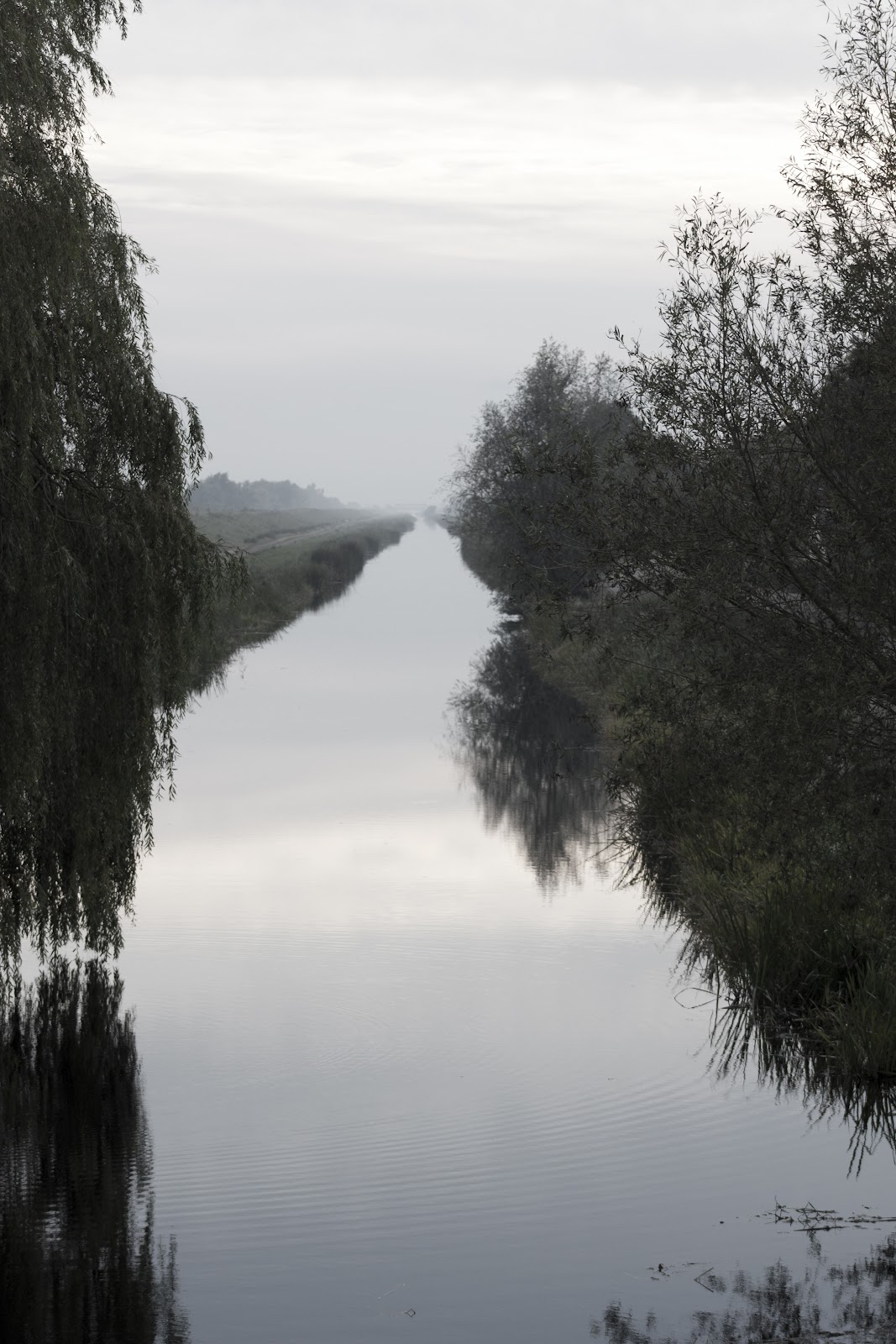
In mid-life, most of us have learned to settle for things; to make some kind of accomodation with life; we are less inclined to waste time and energy kicking against the pricks. We look for compensations, accentuate the positive, or try to. Visitors to this region tend to see the Fen during the oppressive heat and drought of the East Anglian summer, when the landscape is flat, boring and monotonous. In winter, the same territory, between and around the Old and New Bedford rivers, serves as a flood-plain and becomes hauntingly, if austerely, beautiful and mysterious. The view southwards from the bridge at Welney, just along the road from here, is of the dead-straight, man-made river stretching out far ahead to its eventual conjunction with the blurred, misty-watery horizon between land and sky and the great red-gold ball of the setting sun. Immense curtains of mist glide vertically off the rivers and come rolling in from the water-meadows and fields. 


At these times, the rivers, the fields and the great dome of sky, mist and cloud merge and coalesce, the one into the other; at first pink streaked with gold, then gold streaked with silver, then silver fading into misty mauve, blue, grey, brown and, finally, ink-black, all of it mirrored throughout in the great flat infinity of slow-moving, near-static water, such that the fields and riverbanks seem to be floating in suspension between water and sky in a shifting, evanescent mass of refracted sunlight, mist, colour, cloud, river and sea. Areas of higher land and clumps of trees are seen in the distance only as sinister black islands. As day fades to night, a solitary individual - perhaps myself - stands on the bridge, poised between water, mist and sky; no longer a creature of terra firma, more a throwback to those pre-historic times when our earliest ancestors, the first and most inquisitive of the amphibious fish-things, flopped and slithered its way out of the water, through the mud and up on to the land.


What is it that draws us back to the water, again and again? Why do we feel such a sense of peace and tranquility here, and nowhere else but here? Is this where the ancestral fish-thing in each of us feels most at home? Or are there still fishy things deep in there now, calling us home?

The Fen villages stand on what used to be islands of higher ground, surrounded until quite recently by marsh and fen. They were isolated communities, cut off from the outside world by the surrounding marshland and water. In the past, the Fens were a place of refuge for fugitives, outlaws and persecuted religious groups. The Fen people were nicknamed “yellow-bellies” on the basis of their aquatic way of life and because their ancestors were supposed to have interbred with the water-dwelling local wildlife of frogs, newts and toads. More to the point, the isolated character of the Fen villages, and the difficulty of travel
ling from one village to another, meant that the Fen communities were prone to in-breeding. This problem was eventually diminished by the draining of the Fens for purposes of agriculture and, as in other rural areas, by the advent of the bicycle, which allowed eager young lads access to girls in more distant communities and to distribute their genetic inheritance more widely in the process; but people still say that babies in the remoter villages are born with webbed feet.


We young lads all lived for the weekends. Come Friday night, the lads from the village and round about would get beered up at the Seven Stars, then piled into their Ford saloons and Morris vans and set off for the dance-halls in March or Wisbech, or perhaps Downham or Ely; wherever they had a late licence. Most nights, you knew who would be there. There might be one really lovely girl you and all the other lads dreamed about getting off with, and there would be the others, honest, plain-faced country girls built for endurance rather than style, broad of beam and sharp of tongue; too much like your best pal’s mother to be taken seriously as girlfriend material.
 

Saturday, 29 September 2012


PICKWICK  has made his views known on crime, immigration, local history, our lost railways, and forgotten heroes. Now, in an attempt to secure a big media deal alongside Jamie, Gordon and Delia, he brings you a series of recipes for wonderful meals, using mostly local products, or at the very least, stuff which can be bought locally for next to nothing.


WISBECH MUSSELS  has a very simple starting point. From late September onwards, go to Rout's fish stall on the market and buy a kilo of live mussels. Forget oysters and scallops - these beauties are a third of the price and twice as tasty. A big bag will cost you less than £3.00. If you are very lucky, your dosh will buy you a conversation with Mrs Finnis, the proprietor - she is wickedly funny and has a brilliant sense of humour.

Next, you will need a can of chopped tomatoes, some bitter beer and a bottle of cheap white plonk. If you can get to B&M Bargains, all this will cost you under a fiver.

Pop next door to Morrisons, and buy a few chunks of spicy Chorizo sausage, and a loaf of crusty French bread. If you can get to LIDL, buy some lovely Chinese 'single-bulb' garlic. It comes in a pretty little basket, and although it isn't quite as strong as the usual stuff, it has a sweet taste, and is fifty times easier to prepare. Grab some dried or fresh parsley, and we are ready to roll.


Chinese garlic
Chorizo sausage

Cube the chorizo, and simmer it gently in some olive oil. Keeping the lid off the pan, add the tomatoes and chopped garlic. When the liquid has reduced, chuck in the parsley and the plonk. You need to have cleaned the mussels in cold water, pulling off the little beards of seaweed, and ditching any open or broken shells. 


Tip the cleaned shellfish into the pan, put on the lid, and turn up the heat. In about four minutes, the mussels will be done. Put them into bowls, pour the juice over them, crack open the beer, slice the bread, and you are in Food Heaven, Wisbech style!

WISBECH MUSSELS

Sunday, 9 September 2012


In a quiet corner of the parish church, high up on a wall, is a forgotten memorial to a forgotten school. The Barton School had opened for business in the middle years of the nineteenth century, and had for many years been run by a family called Stanton. Many of the sons and brothers were clerics, and the school had a strange, almost symbiotic relationship with the Grammar School. At one point, one Stanton brother was Head of Barton School, while another was Head of the Grammar School. Debts and scandal forced the school to close in 1913.


Despite the air of shabby gentility which The Barton School must have had in its final years, many of its ex-pupils would have been seen, by the standards of the time, good officer material. Several of the men mentioned on the Roll of Honour appear to have no obvious connection with Wisbech, but it must be remembered that the school took boarders, and these might have come from far and near. Names with an asterisk also appear on the main town war memorial in The Crescent.

W.L. Blake - Probably William Lovewell Blake, 2nd Lieutenant in The Norfolk Regiment, who died on March 27th 1918. He is buried in Doullens Cemetery Extension, near Amiens, France. He was the son of George Lovewell Blake & Elizabeth Ellen Blake, of Great Yarmouth.

Wm Bodger* - Bill Bodger was a Sergeant in The Cambridgeshire Regiment. His relatives are the Bodgers who run the agricultural machinery business in Wisbech. He was a committed Christian, was involved with local scouting and youth groups, and had been awarded a Humane Society medal for saving a child from drowning in a local river.. He was killed on July 31st 1917, the first day of The Third Battle of Ypres, more commonly known as Passchendaele. His body was never found, and his name is inscribed on the Menin Gate in Ypres. He was the son of Grace Shepherd Bodger & late Richard Bodger. Lived 21 High Street, Wisbech.


Bill Bodger

Nigel Bruce* - his name also appears on the Wisbech Grammar School memorial. He lived on Harecroft Road, and was an airman. He was something of a daredevil, and the local paper reported that he once landed his aircraft on a field near his home. His luck ran out, and he was killed in a mid-air collision on September 19th, 1918. His body was never recovered, and his name is on the Arras Memorial To The Missing.

Jack V. Burks - probably Jack Victor Burks, Private 14647 of The Northamptonshire Regiment. He was killed at the Battle of Loos on September 25th 1915. His body was never recovered and his name is on the Loos Memorial To The Missing. He was the son of Charles Wells Burks, The Firs, Eastfield, Peterborough. Employed by Fox & Vergette, auctioneers, Peterborough.

Edward Burgis* - was Second Lieutenant in The Manchester Regiment, and was killed near Ypres on October 16th 1917. His body was never identified, and his name is on the Tyne Cot memorial To The Missing. He was Manager of English Brothers basket factory. Third son of Mr & Mrs Burgis, North Farm, Docking, Norfolk; husband of Mrs Burgis, 58 Lynn Road, Wisbech. Served on Western Front in 15th London (Civil Service Rifles) May 1916 to March 1917, & commissioned August 1917.


Leonard W. Brooks - probably 2nd Lieutenant in the Royal Flying Corps, but formerly of The Hampshire Regiment, killed in action on July 6th 1917, and buried in Bully-Grenay Communal Cemetery Extension. He was the elder son of John & Emma Brooks, Church St, Peterborough. He owned a bakery & corn business at Elm Bridge.

Fred Chapman* - was a 2nd Lieutenant in The Royal Fusiliers, and was killed on August 22nd 1918. He is buried in Bray Vale Military Cemetery. He was the Son of John & Elizabeth Chapman, of Wisbech; husband of Rose Mary Chapman. Lived 2 Barton Road, Wisbech.

J.G.Chivers - was probably Lance Corporal John Gibbs Chivers., of The Royal Engineers. He was born in Sawston, enlisted in Grantham, and died at sea on December 30th 1917, almost certainly on the merchant ship Aragon, sunk by an enemy submarine at the entrance to Alexandria harbour, Egypt. His name is on the Chatby Memorial, Alexandria.

 
Fred Clarke* - was Serjeant Frederick Clarke, 16568, of The Norfolk Regiment. He was killed on October 12th 1916 in the later stages of The Battle Of The Somme, and his name is commemorated on The Thiepval Memorial.


Bernard Cockett - Bernard Charles Cockett,  of the Northamptonshire Yeomanry was a Walsoken man  who died at home of spotted fever on 21st March, 1915 aged 21. Bernard was the son of Alfred and Gertrude Cockett of the Mount, Norwich Road, Walsoken and he is buried in Wisbech Borough Cemetery. His parents erected an elaborate memorial, which has now crumbled. An official GWGC headstone was put up at a later date.


L.B.D. Colls - maybe Corporal Lisle B. D. Colls, of The Australian Imperial Force, according to Cambridgeshire 'Roll of Honour'. Died on the first day of the Gallipoli landings, April 25th 1915. His body was never found and his name is listed on the Lone Pine Memorial. His parents lived in Harrogate, so his Wisbech connection is unverified.

Stanley Dann* - Trooper, 1/1st Norfolk Yeomanry. He was killed in action on December 12th 1915, just before the final withdrawal from Gallipoli.He was aged 17. Named on the Helles Memorial, Turkey. Son of Mr C W Dann, Wisbech.

A.E. Dorman - Bombadier Arthur Edward Dorman, 1st Bde Australian Field Artillery. Died November 14th 1916 age 28. Son of Edward Meadwell Dorman & Emila Jane Dorman. Native of Uppingham, Rutland. Buried Warlencourt British Cemetery, Pas de Calais, France.

Edward Fletcher - No information

Eric Gardiner* - Private Ernest Frederick Gardiner, Honorable Artillery Company. Died of wounds on April 20th 1915, age 23. Son of Frederick J Gardiner, Editor and proprietor of Wisbech Advertiser newspaper, and Amelia Gardiner, of Trevordale, Alexandra Rd, Wisbech. An accountant in London & Paris. Originally buried in Elzenwalle Chateau, but later moved to Voormezeele Enclosure No 3, Belgium. Eric's name is on the kerbing of the Gardiner family memorial in Leverington Road cemetery.

Wm Halstead - Corporal John William Halstead, 1/1st Btn Cambridgeshire Regiment. Killed in action on September 4th 1916. Son of Mr & Mrs Joseph Halstead, Grassgate Farm, Walsoken. Knightsbridge Cemetery, Mesnil-Martinsart, France.
N.C. Hardwick - Lieutenant Nathaniel Charles Hardwick, 10th Btn Duke of Cornwall's Light Infantry Died September 15th 1917, aged 42. Son of Charles Hardwick, of Sutton, Surrey; husband of Julia G Hardwick, Mount Pleasant, Bodmin, Cornwall. Buried Ramscapelle Road Military Cemetery, Nieuwpoort, Belgium.

Fred Heanes - Private Fred Heanes 4th Btn North Staffordshire Regiment. Died of wounds May 8th 1919, age 21. Buried in Sutton St James Churchyard, Lincs.
P.A. Clarke - No information

C.W.F. Hopkin* - Private Charles William Fisher Hopkin, 11th Btn Notts & Derby Rgt (Sherwood Foresters). Killed in action October 5th 1918, age 27, at Guisancourt Farm. Buried Guizancourt Farm Cemetery, Gouy, Aisne, France.

P.L. Hutchinson - No information

Sidney Lambert* - Private Sidney Theophilus Lambert, 1/1st Btn Cambridgeshire Regiment. Died of wounds August 29th 1918, age 21. Son of Ambrose Victor & Anna Sarah Lambert, of 1 Victoria Place, Wisbech. Buried Daours Communal Cemetery Extension, Somme, France.
Ernest Leake* - Rifleman Ernest Leake, 13th Btn London Rgt (Kensington Rifles). February 16th 1918, age 22. Buried in Wisbech Borough Cemetery. His parents put up a modest memorial at his graveside, but an official CWGC headstone was added later.


P.G. Miller - Able Seaman Percy George Miller, Drake Btn Royal Naval Division. Killed in action April 23rd 1917. Lived Elmville, Wisbech. He probably died in what was known as The Second Battle Of The Scarpe, part of The Battle Of Arras.

Thos. Morton - Trooper Thomas Morton, Trooper, 1st Norfolk Yeomanry. Died of jaundice December 5th 1915. Son of Mr James Morton, The Hook. Buried in Ari Burnu Cemetery, Gallipoli. He is also named on the Wimblington war memorial.

A.H. Muirhead - 2nd Lieutenant Alexander Hugh Muirhead, 1/1st Btn Cambridgeshire Regiment. Killed in action July 31st 1917, age 35, by sniper. Only son of Alexander Muirhead, Glenvarloch, Lyndenwood Rd, Cambridge. Educated Perse School, Cambridge, & Barton School, Wisbech. Joined Suffolk Yeomanry as a Trooper. Sgt, served in Gallipoli campaign, 1915. Commissioned 1916, 3/1st Btn Cambs Rgt & drafted to 1/1st Btn 27-5-17. He died on the opening day of the Third battle of Ypres. His body was never identified, and his name is listed on The Menin Gate.

W.S. Nevill - 2nd Lieutenant William Sim Nevill, Royal Garrison Artillery. Died September 25th, age 26. Son of John & Flora Nevill, of Glasgow; husband of Janet McNeil Nevill, 3 Pangrove Terrace, Glasgow West. Buried in the Guards Cemetery, Lesboeufs, Somme, France.

L.J. Parker* - Private Leonard J. Parker, 38th Btn (Eastern Ontario Rgt) Canadians. Killed in action November 1st 1916, age 27. Only son of Mrs E F Parker & late Mr J T Parker, 101 Norfolk Street, Wisbech. Buried in Adanac Military Cemetery, Miraumont, Somme, France.
H.S. Pick - Corporal Harry Shelton Pick, 09th Battery, Royal Field Artillery. Died October 2nd 1915, age 29. Son of Thomas & Ellen Pick; husband of Gertrude Pick, of Rusthall, Tonbridge Wells. Buried in Boulogne Eastern Cemetery, Pas de Calais, France.

G.W. Sanderson - Gunner George William Sanderson, A Bty, 50th Bde, Royal Field Artillery. Killed in action 21-3-18, age 19. Son of George R & M R Sanderson, of 54 St Chad's Rd, Derby. Born Holbeach, Lincs. Buried in Peronne Communal Cemetery Extension, Ste Radegonde.
H.S. Scorer - Captain Herbert Selwyn Scorer, C Company, 5th Btn Lincolnshire Regiment. Died October 13th 1915, age 29. Son of John Norton Scorer & Susan Scorer, of The Limes, Fletton Avenue, Peterborough. Listed on The Loos Memorial To The Missing.

C.F. Snow - 2nd Lieutenant Charles Foote Snow, Royal Field Artillery. Killed in action June 30th 1916, while acting as forward observation officer, age 28. Elder son of Mr & Mrs W H Snow, Westgate, Peterborough. Had served in German South-West Africa under Botha & re-enlisted on return to UK. Buried in London Rifle Brigade Cemetery, Ploegsteert, Belgium.

R.G.O. Stanton - Lieutenant Robert Greenlow Openshaw Stanton, 4th Btn Royal Marine Light Infantry. Died April 28th 1918, age 21. Son of William Edwin & Anne Openshaw Relph Stanton, of Market Deeping, Lincs. Buried in Market Deeping Cemetery, Lincolnshire.

R.W. Tunnard* - Sergeant Raymond William Tunnard, 12th (Yeomanry) Btn Norfolk Regiment. Killed in action August 18th 1918, age 24. Formerly C Squadron, Norfolk Yeomanry. Son of Charles and Annie Tunnard, of 12 Market Place, Wisbech. Buried in Le Grand Hasard Military Cemetery, Nord, France.

A.E. Thorpe* - 2nd Lieutenant Arthur Edward Thorpe, 11th (2nd Hull) Btn East Yorkshire Regiment. Died of paralysis on December 6th 1918, age 26. Son of George and Ellen Thorpe, of Wisbech. Husband of Dora Thorpe, 30 Milner Rd, Wisbech. Buried in Longuenesse (St Omer) Souvenir Cemetery, Pas de Calais, France.

Harold Walsham* - Private Harold Walsham, 1st Btn King's Shropshire Light Infantry. Killed in action April 23rd 1918, age 27. Son of Annie Walsham, of 6 Upper Hill Street, Wisbech, and the late Jesse Walsham. Listed on the Pozieres Memorial, Somme, France.
Bryan Ward - No information

Arthur Wilson - No information
H. Saunders* - Lance Corporal Herbert Saunders, C Company, 1st Btn Rifle Brigade. Killed in action May 18th 1918. Lived Norfolk Street, Wisbech. Buried in Le Vertannoy British Cemetery, Hinges, Pas de Calais, France.

Stanley T. Aubin* - Rifleman Stanley Thomas Aubin, 2th Btn King's Royal Rifle Corps. Died of wounds December 2nd 1917, age 25. Son of Thomas Aubin, of 28 North Brink, Wisbech. Listed on the Cambrai Memorial, Louverval, Nord, France. Aubin died during The Battle Of Cambrai, and it is likely that he was buried in a makeshift grave which was later lost.

Leslie Parren* - Corporal Leslie Southwell Parren, 12th (Norfolk Yeomanry) Btn, Norfolk Regiment. Drowned at sea (HT Aragon) December 30th 1917, age 23. Son of John Robert and Rose Ellen Parren, of Lindon House, South Brink, Wisbech. Listed on The Chatby Memorial, Alexandria, Egypt. There is a macabre story attached to the death of Leslie Parren, which was related to me by a family member. Parren was on his way to the Far East when his troopship, Aragon, was hit by a mine. He was lucky enough to be picked up by a destroyer, HMS Attack, but that was promptly torpedoed. Meanwhile, back at their South Brink home, Parren's mother awoke with a start in the middle of the night to see, at the foot of the bed, a ghostly hand emerging from what appeared to be the surface of the sea. She cried out to her husband, "It's Leslie…!" He pacified her, and she went back to sleep. Several days later came the news that Parren had been lost at sea, presumed drowned.
 

HM Troopship Aragon
HMS Attack
Some of the information on this list is the result of my own researches into my book, 'Three Men Went To War', but much is due to the efforts of Cliff Brown, of March, for a page on the Cambridgeshire 'Roll of Honour' site. Many thanks to him for permission to use the information.


Tuesday, 14 August 2012


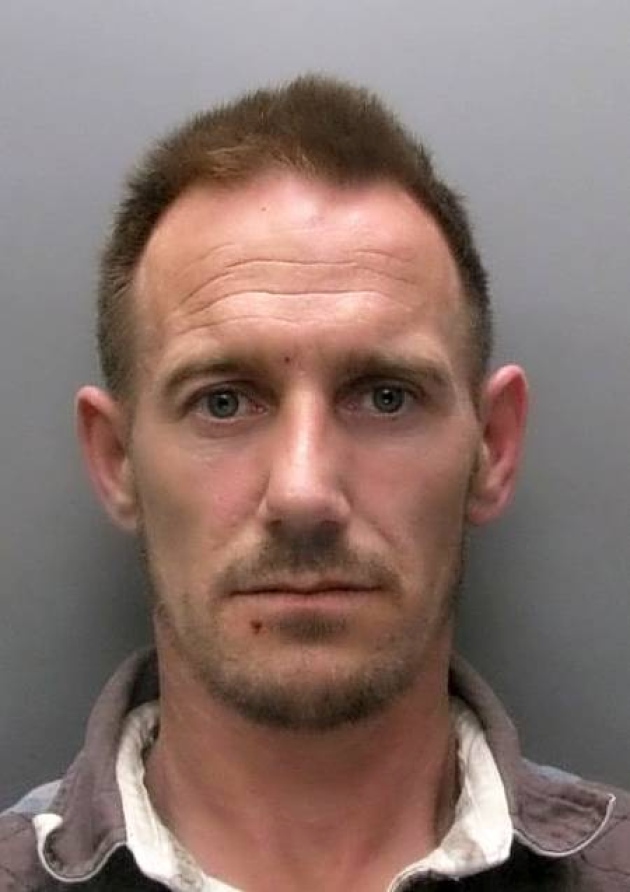
THE ISSUE OF CRIME IN WISBECH will simply not go away, despite the best efforts of the police and our elected representatives to divert our attention elsewhere. There has been high-profile crime in recent months. Take the terrible case of 22 year-old university student Jamie Butcher, who was cut down by a speeding motorist and left for dead. He was dead. The 'motorist'  - although this term implies that we have a driver who is educated enough and has sufficient skill to control a car - was eventually arrested. Michael Moore (pictured)


was so traumatised by events that he could only cope with his remorse by, a few days later, setting out to rob a Norfolk supermarket. His callousness was only exceeded by his incompetence, and he was soon arrested. Again. He was eventually sentenced for both crimes, and is serving a couple of fairly comfortable years at taxpayers' expense. He will no doubt return to his home village and be greeted by a balloon and ticker-tape welcome provided for by his admirers. The Butcher family, meanwhile, are left to try to get on with their lives, haunted by the ghost of Jamie and what a wonderful life he might have had.

In simple terms, crime in Wisbech is double that of King's Lynn. This spreadsheet, taken and analysed from official police data by the redoubtable Brian Parkinson, shows how bad things are. Lynn is, anecdotally, regarded as one of the roughest, toughest places in East Anglia, and yet per head of population, we get double their crime, as the spreadsheet shows.


Here are some crime maps, again taken from the police's own website, which show crime data for June 2012. They speak for themselves.


No doubt Inspector Sissons will assure us that all is well, and his brave team of crime fighters is working tirelessly on our behalf to make Wisbech a safer and more compassionate place to live. WHAT DO YOU THINK…? 

Monday, 23 July 2012


THE UNACCEPTABLE FACE OF FACEBOOK (and Wisbech)

THERE IS A FACEBOOK PAGE called 'Wisbech Town Wisbech'. It appears to be moderated by Eastern Europeans, mostly Lithuanians, I think. From what I can see, most of the posts are adverts for (possibly) dodgy tobacco, minibus trips to and from 'the old country', and accommodation. Not a shining light in the quest for better understanding and integration perhaps, but harmless enough. In the last few days, there has been a thread running which started with this post. (I have blocked out the names and the obscenities - the matter has now been referred to the police)


From this inspired and thoughtful comment on modern life, there then followed a succession of over ninety posts. Some were from articulate and puzzled migrants, whose spelling and command of English was somewhat better than that of their assailants. The poisonous responses continued.


A woman who had visited Wisbech recently weighed into the conversation, agreeing that some of the behaviour of some migrants left a lot to be desired, but revealing that she had been embarrassed and shocked by the language and attitude of some very obviously 'local' people during her visit. As this woman was obviously from the far-east, this then provoked another descent into the gutter.


There are many long and complex issues buried beneath the hate and obscenity of these Facebook posts. YES, it does seem virtually impossible to have a sensible debate about migration without the Race Card being flourished at the earliest opportunity by the ragged remnants of the professional left wing. YES, we are overcrowded, and there is intense pressure placed on our Public Services by migration, mainly from the EU. However, NO amount of frustration can justify this barely literate spew of hate and prejudice.

I close with this personal observation. I do volunteer work at the local drop-in centre, teaching English. Every Thursday night, without fail, we have a class of 20-odd men and women from all over Europe. In no particular order, we see Poles, Latvians, Lithuanians, Estonians, Hungarians, Slovaks, Bulgarians…and some I have probably missed. Almost inevitably, they have worked a long day somewhere at some repetitive, poorly paid job. They drag themselves in to the language class to spend the next two hours grappling cheerfully with a complex and puzzling language. At the end, they are all ridiculously grateful and polite, but then they go home, usually to shared accommodation, sometimes two or three to a room. As I said to my colleague last week, "What on earth can things be like 'at home' if their lifestyle here is preferable…?" 


POSTSCRIPT - some common sense on migration issues from one of our local politicians.(and never mind the greengrocers' apostrophe - he talks sense!)
http://www.stevetierney.org/blog/?p=3890

Thursday, 12 July 2012


I have amazing news, Wisbechians. After a carefully prepared bid, and extensive lobbying in the corridors and urinals of power, Wisbech Community Forum has secured finance to produce the blockbuster movie which the residents of Fenland have been salivating over for many years. Thanks to a grant from The Fenland Film Development Foundation, we start shooting in August. We have hired a stellar cast, and this should be the film which finally puts Wisbech in its rightful place.


Intrepid, scandal-busting local journalist Jack Elthansafety (Kevin Whately) has worked for six weeks to expose a cash-for-silence scandal which could bring down several public figures. After plying ex-mayor Jon Framer(Tony Robinson) with pina coladas, Elthansafety believes he has the scoop of a lifetime. Local crime-busting police chief Inspector Sizzle (Christian Bale) needs only one more piece of evidence from Elthansafety before he will order dawn raids on exclusive addresses the length and breadth of Woodcote Park.


Jack Elthansafety, Jon Framer, Inspector Sizzle

Then, Elthansafety fails to show up for work at the local media hub, The Gloathouse. A press conference convened for that morning breaks up in disarray. Stern-face council executive Arthur Milton (Alan Rickman) issues a statement, but he is interrupted from the floor by celebrity campaigner Vanessa Garrod (Dame Maggie Smith). She claims that Elthansafety has been assassinated by a sinister cabal of kebab shop owners, liberal doctors and members of Greenpeace For Gay Marriage.


Arthur Milton, Vanessa Garrod

Meanwhile, plucky blonde councillor and every kid's buddy, Sarah Hoyle (Kate Winslet) believes that there are dirty deeds afoot. She confides in her best friend, burly libertarian activist Stan Turner (Ray Winstone), but as she leaves his executive cafe and eatery, she is unaware of the sinister figure lurking on the corner. As Sam heads back to her illegally parked Mondeo, she fails to notice local gunman Terry Mitchell (Sir Anthony Hopkins) sidling into the cafe and ordering a Raspberry Tea with a slice of gluten-free beetroot cake.


Sarah Hoyle, Stan Turner, Terry Mitchell

As Sarah slides her Mondeo into the luxury garage beneath her Waterlees penthouse, she is aware of a gaunt figure having a pee against the wall. Shaking himself off, he approaches her. It is the legendary Bob The Tramp (Sir Ian McKellen). He shocks her with the revelation, "I know who done it, missus - it was Molly that told me - she came to me in the middle of the night.." He describes in precise detail how Molly (Miriam Margolyes)) appeared to him as a phantom, and told him all the secrets of PE13.

Bob The Tramp, Molly Watkins


What happens next… Has Eltheansafety been silenced by his corporate enemies? Have they gone one step too far in their desperate quest for global power? Has Bob been drinking too much lighter fuel? The film opens at The Luxe cinema, Alexandra Road, Wisbech on September 17th (corporate guests, sponsors, and WTC members only) For the rest of you suckers, you will have to wait until the remaindered DVD appears at a LIDL near you.